In densely populated urban areas or regions with challenging terrains where overhead line installation is not feasible, underground power cables are employed as an alternative solution. In this article, we will introduce the process for installing underground power cables according to the National Standard and discuss common mistakes often encountered during subterranean cable laying.
Requirements for the Underground Power Cable Installation Process
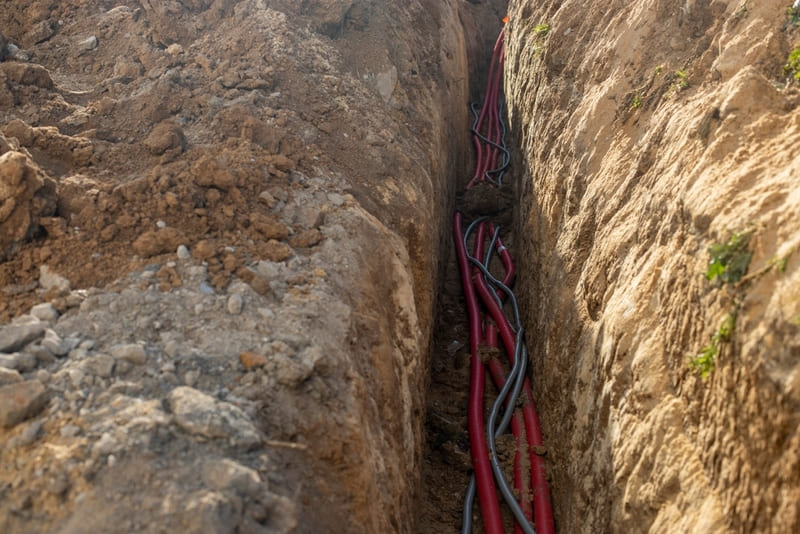
The underground power cable installation process must comply with the National Standard TCVN 7997:2009, which includes the following key requirements:
- Cable Laying Depth: Underground cables and their protective ducts must be laid at a depth of at least 0.6m below ground level in areas not subjected to traffic load, and at least 1.2m in areas with roadways or where heavy objects exert pressure. Additionally, cables should be positioned at least 1-1.5m away from the roots of large trees.
- Protection Structure: Buried cables are mandatory to be placed inside a protective duct or a reinforced concrete trough. The cable protection layer must be completely sealed, with no height differential that could potentially damage the cable.
- Protective Duct Diameter: For a single cable, the inner diameter of the duct must be 1.5 times the cable's outer diameter. For multiple cables, the duct's diameter must be 1.5 times the diameter of the circumscribing circle of the cable group.
- Location of Underground Cable Boxes (Manholes/Handholes): These must be located in positions convenient for cable pulling, jointing, or branching. The length of the straight pipe run between cable boxes must not exceed ≤150m.
- Cable Position: Cables must not cross each other, or if they do, each cable must have a separate protective sheath. The minimum clear distance between two parallel cables must be 15cm.
- Requirements for Joints, Duct Ends, and Gaps: These must be made of materials with good waterproofing, moisture resistance, and mechanical strength to ensure all joints and gaps are watertight. Notably, metal joints and duct ends must be wrapped with anti-corrosion tape.
- Soil and Sand for Backfilling: Only soil and sand free from sharp stones or gravel should be used to avoid tearing or damaging the cable. All trenches must be thoroughly compacted and leveled, especially for parallel duct runs.
- Soft Soil Treatment: Measures must be implemented to treat soft soil to ensure uniform soil characteristics across all underground power cable construction areas.
- Separation of Cable Types: Underground power cables must not be in direct contact with fiber optic cables or low-voltage/weak-current cables. A separation distance of ≤30cm must be maintained between these cable types.
- Cable Pulling Tension: Each cable type has an allowable pulling tension (Max Pulling Force). The underground cable installation process must not exceed this parameter to prevent compromising the cable's properties or causing a break.
Underground Power Cable Installation Procedure
The underground power cable installation procedure varies by country. In Vietnam, the basic process involves the following steps:
Site Survey and Preparation
This is the initial stage of the underground power cable installation process.
- Geographical Survey: Before construction, the contractor must prepare the site and conduct a geographical survey to ascertain soil characteristics, environmental conditions, and create an installation map.
- Legal Procedures: The contractor must register or obtain necessary construction permits to avoid legal complications from local authorities.
- Material, Tool, and Equipment Preparation: Procure and prepare all necessary materials, tools, and equipment.
Trench Excavation
The anticipated number of HDPE corrugated ducts to be placed in the trench determines the trench width to ensure safe clearance. The cable protective ducts must be placed on a compacted, level cable bedding. It is strictly forbidden to place the bottom-most duct on hard rock or gravel.
Tasks within the trench excavation stage include:
- Accurately determining the size and location of the trench to be dug.
- Identifying the location and depth of all existing underground utilities in the excavation area, especially other power cables, to adjust the excavation method accordingly.
- Calculating the number of protective ducts from the required trench width and proceeding with excavation.
Currently, there are two common methods for cable trench excavation: mechanical and manual. For sensitive areas, trenchless technology is utilized.
Mechanical Excavation
This is the optimal method for installing underground power cables. Typically, contractors use excavators to dig trenches with a maximum width of 15m. Common trench widths range from 0.6 - 1.2m, with a minimum depth of 1.2m.
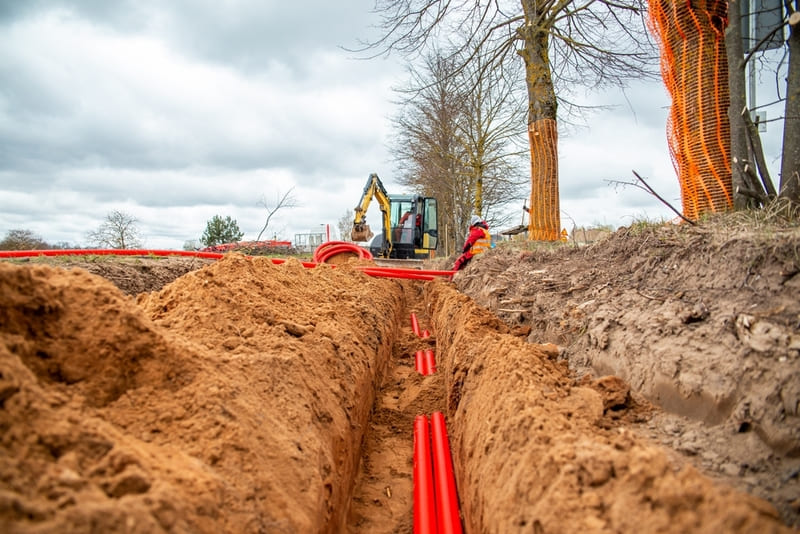
The excavated trench will be backfilled with fluidized thermal backfill material or thermal sand. However, this method is not feasible in all areas. Mechanical excavation is only implemented in areas with non-complex terrain and, specifically, where there are no existing power cable lines underneath.
Manual Excavation
Manual excavation is applied when machine-based digging is not feasible, for example, in areas with existing underground cable systems or complex soil/rock conditions. In this case, shovels and crowbars are used instead of excavators.
Trenchless Technology Excavation
In areas where neither manual nor mechanical excavation is suitable, trenchless technology using pipe jacking, micro-tunneling, or horizontal directional drilling (HDD) will be applied.
- Pipe Jacking and Micro-tunneling: Pits are dug on both sides of the obstruction with a length of 30 - 100m, and then steel casing pipes are used to open the pathway.
- Horizontal Directional Drilling (HDD): A small pilot hole (about 152mm) is drilled under the obstruction, followed by pulling back a polyethylene casing. With this technology, the cable duct is installed without using a protective casing.
Laying Protective Ducts
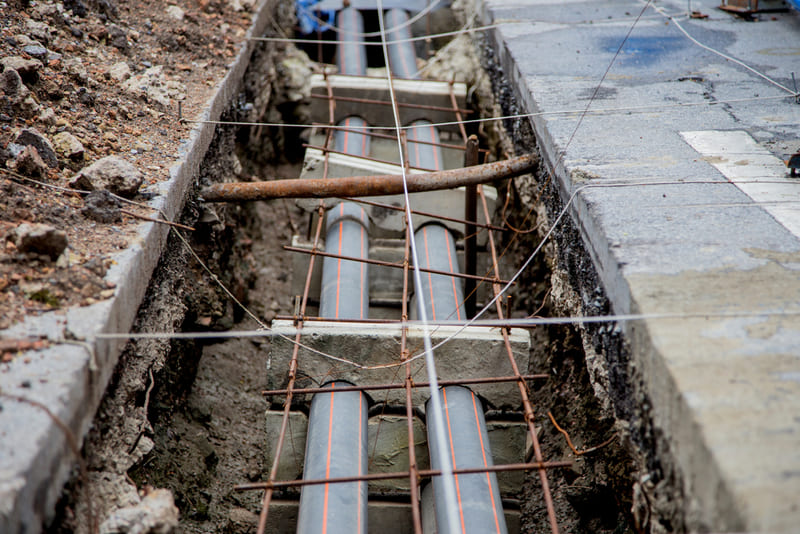
The HDPE corrugated ducts or cable protective ducts are placed into the excavated trench, ensuring the minimum required distance is maintained for parallel ducts, and preventing the intrusion of soil, water, insects, or animals. Markers should be placed at both ends of the duct to facilitate faster cable pulling.
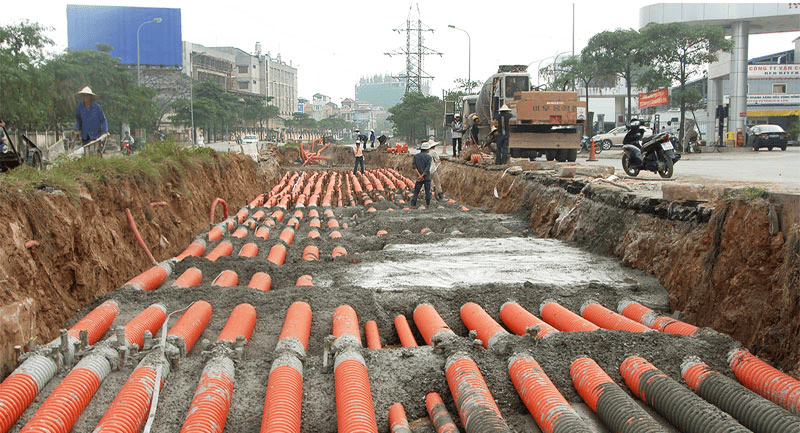
Once the protective ducts are laid, they are secured with steel wire or wood before the trench is backfilled with clean soil and sand, free from gravel.
Pulling Cable into Ducts
Before pulling the cable into the duct, a small 9.5mm mandrel is often pulled through first to check for obstructions. The cable is then neatly bundled, and an appropriate push-pull method is used to thread it inside the protective duct.
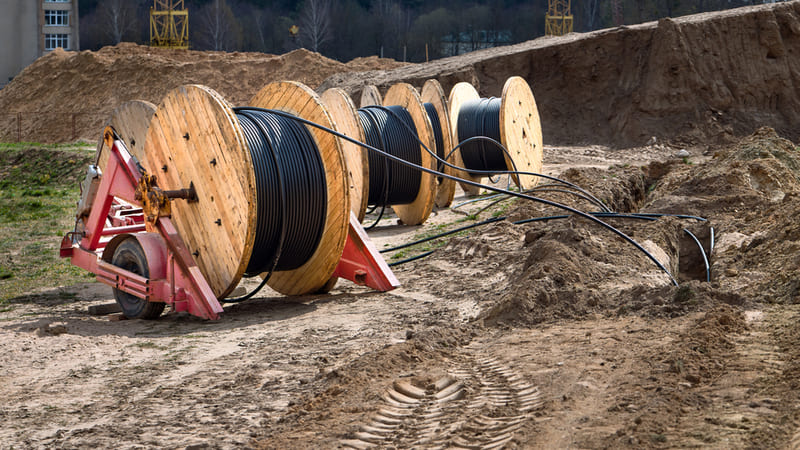
During the cable pull, the pulling speed must be consistent, approximately 30m/minute. Sudden stops are strictly forbidden as they can affect the cable's tension. To reduce pulling force, lubricant should be applied to the cable, and the standard pulling tension for each cable type must be maintained using a dynamometer. To prevent over-running, a reel brake is used, but the back-tension must be continuously monitored.
For cables directly buried in the ground, the cable will be pulled using rollers placed 1.5m apart in the trench.
Cable Jointing
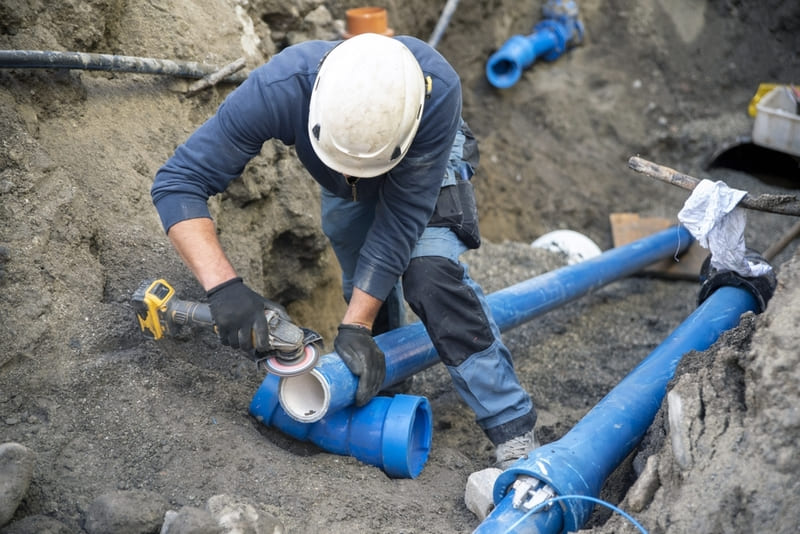
To join two cable sections, a specialized jointing sleeve must be used. The diameter of the joint must be larger than the conductor, and it must be covered with insulating material to manage electrical stress.
- Extruded Cables (XLPE): The outer layer at the cable end is stripped to expose the conductor, and an appropriate sleeve is used to connect the two cable sections. These joints are then sealed using a cable jointing kit.
- HPPT and SCFF Cables: When connecting cable ends, hydraulic continuity and positive pressure within the cable must be calculated. To join SCFF cables, a link joint is utilized, where a steel sleeve is welded over the three-phase joint and to the duct ends before being pressurized with dry nitrogen gas and dielectric oil.
Completion of Construction
After jointing, the cables are connected to other equipment via terminations to allow the installer to conveniently supervise the transition between the cable's high-dielectric-strength insulation layer and the low-dielectric-strength air. Terminations also prevent moisture, chemicals, or insects from entering the cable.
The base plate of the cable termination will be isolated from the supporting structure to manage circulating currents and allow for the application of cathodic protection voltage to the cable sheath. Crucially, upon completion of the underground power cable installation process, electrical engineers must use a multimeter/ohmmeter to check the continuity of the conductor before the cable is commissioned.
Common Mistakes in the Underground Power Cable Installation Process
Due to the specific installation environment, which is susceptible to moisture, insect ingress, and pressure from soil and water, the underground cable installation process is inherently rigorous and prone to certain mistakes, such as:
- Using poor-quality protective ducts unsuitable for the specific underground cable type, leading to easy cable damage or breaks.
- Placing the cable directly into the earth trench without a bottom layer of fine sand protection, making the cable conduit vulnerable to damage from rocks or sharp materials in the soil.
- Installing the cable not in a straight line or violating the standard clearance distance between two parallel cable sections.
- Substandard compaction technique for soil and sand, causing soil subsidence or voids, which affects the cable's lifespan.
- Failing to ensure the standard cable pulling tension, resulting in the cable being over-tensioned or slack, which damages the conductor or insulation layer.
- Laying the underground cable too close to water pipes, gas lines, other underground utilities, or different cable types.
- Warning tape is either not placed correctly above the buried cable or not used at all, preventing excavators from realizing there is an underground cable below.
- Poor joints or terminations not properly insulated, posing a risk of electrical leakage or short circuits.
- Substandard personal protective equipment (PPE) and electrical operating tools, increasing the risk of electrical accidents.
- Failure to comply with TCVN 7997:2009 or other current international standards.
Frequently Asked Questions about the Underground Power Cable Installation Process
Question 1: What is the standard burial depth requirement for underground cables?
Answer: Underground power cables are typically buried at a depth of 0.6m to 1.2m, depending on the traffic load or pressure exerted by vehicles in the area where the cable is buried.
Question 2: What are the common methods for underground cable installation?
Answer: There are two common methods for underground power cable installation in Vietnam: direct burial in the ground and pulling the cable through a protective duct/conduit.
Question 3: What is the purpose of laying sand beneath the protective cable duct layer?
Answer: The bottom layer of sand serves to minimize the impact from the soil and enhance the protection capability of the cable conduit, preventing hard stones or gravel from tearing or damaging the cable duct.